Viviene Westwood
photo:Hypebeast
Spotted: The Queen Who Made Fashion Dangerous
You didn’t hear it from me, but Vivienne Westwood didn’t climb the fashion ladder—she set it on fire and walked away in a corset. From the grey post-war streets of Derbyshire to the front row at Paris Fashion Week, Dame Vivienne proved that fashion isn’t about playing nice—it’s about playing dangerous. And oh, did she play.
Flashback to the 1970s: while the establishment sipped champagne, Westwood and Malcolm McLaren were mixing cocktails of chaos on King’s Road. Their boutique? A battlefield. Their clothes? Weapons. Torn tees with explicit slogans, bondage trousers, and safety pins as punctuation marks—Westwood wasn’t making garments, darling. She was making cultural grenades. Punk wasn’t a trend she hopped on; it was her invention, her manifesto, her Molotov in tartan.
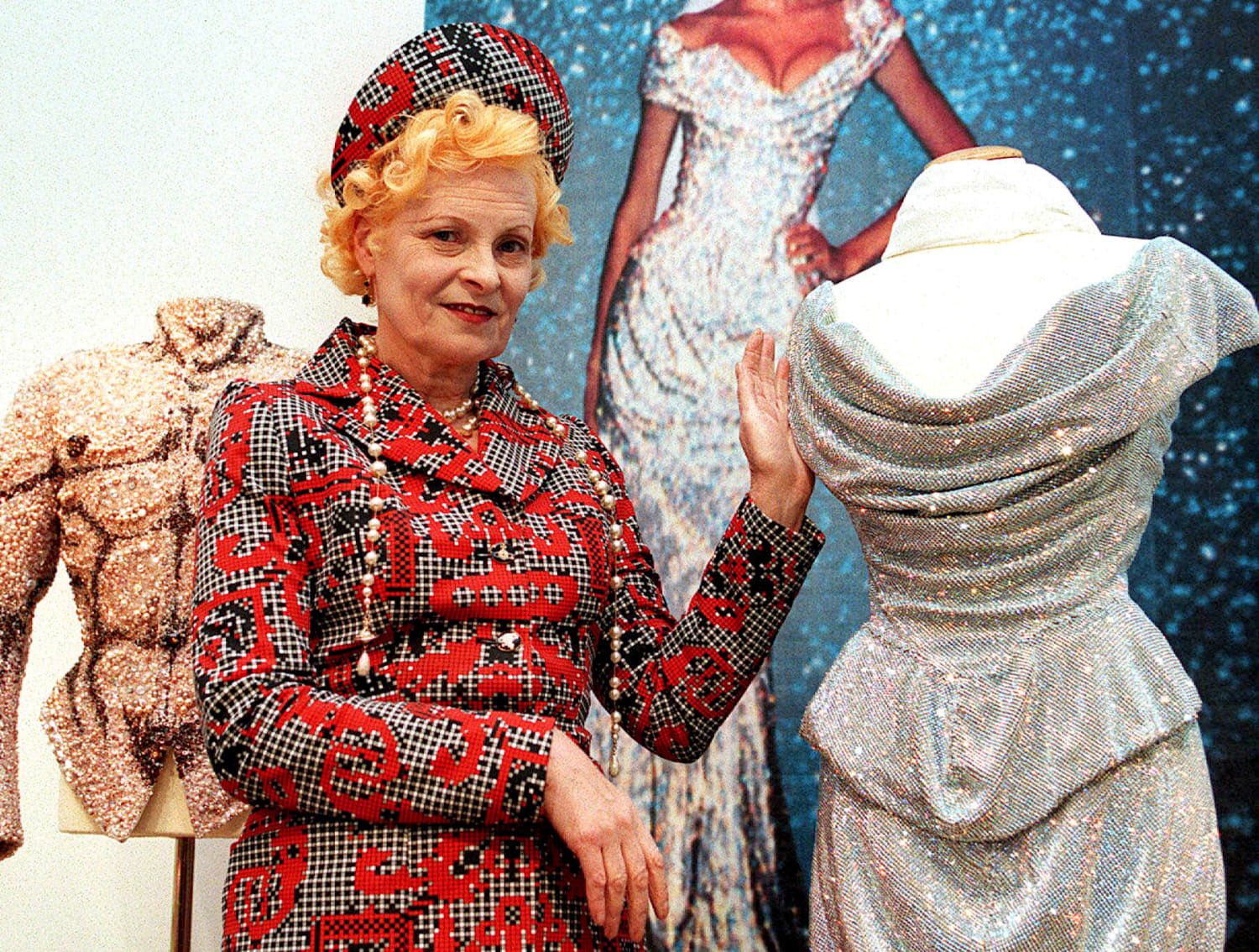
photo:NBC news
Fast forward, and the story only gets juicier. Did she mellow out? Please. She traded spikes for corsets and started quoting Rousseau on the runway. Her collections became lectures stitched in satin—railing against fast fashion, climate collapse, and consumerism. Hypocritical? Maybe. But in true Vivienne style, the contradiction was the point. Buy less, choose well—but make it fashion.
And then came the drama: Anglomania. Spring/Summer 1993 gave us Kate Moss as an anti-bride, floating down the runway clutching a bouquet like a weapon of seduction. That corseted ivory dress? A Rococo dream with a Sex Pistols twist—history and anarchy dancing cheek-to-cheek. And let’s not forget the fully patterned toile-on-toile explosion: exaggerated hips, corset cinching, and satire sewn into every stitch. Only Vivienne could make aristocracy look like it just discovered punk rock.
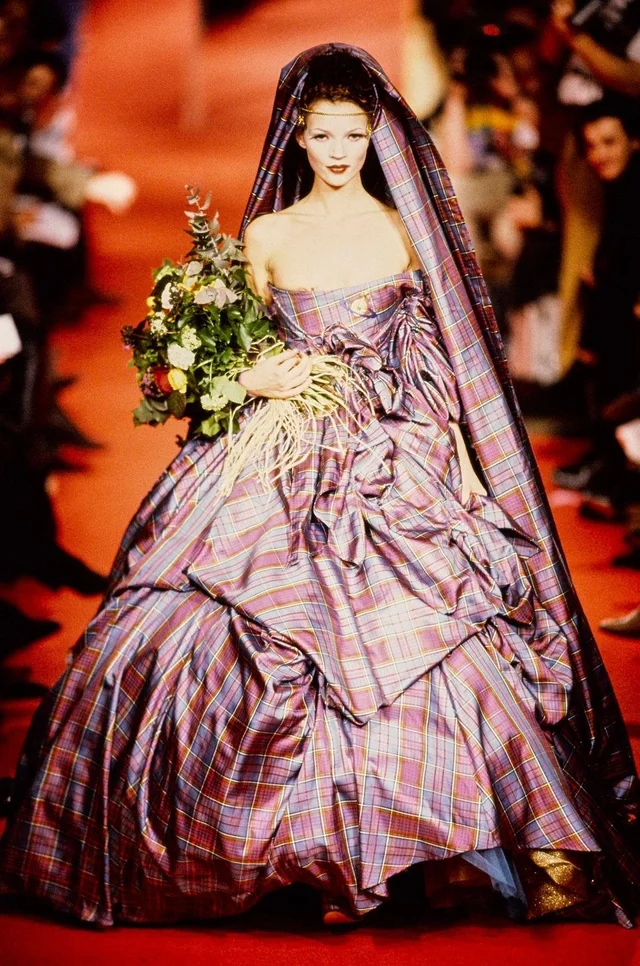
photo:ARCHIVE régne
The decades rolled on, but Westwood never lost her bite. SS2014 turned a wedding gown into a climate-change manifesto—ghostly brides with undone chignons warning the world between pleats and protest. Her casting? Radical. Her beauty looks? Haunting. Her shows? Political theatre disguised as couture. Every hem, every smudge of rouge was a rebellion.
And that bridal finale in 25/26? Darling, it wasn’t a finale—it was a mic drop. A silver-haired goddess gliding in liquid ivory satin, cinched in all the right places, sleeves flaring like whispers of defiance. The message was crystal clear: age isn’t a limit—it’s a weapon. And when a veiled man entered in black satin gloves, the scene turned operatic. This wasn’t a show. It was a manifesto.
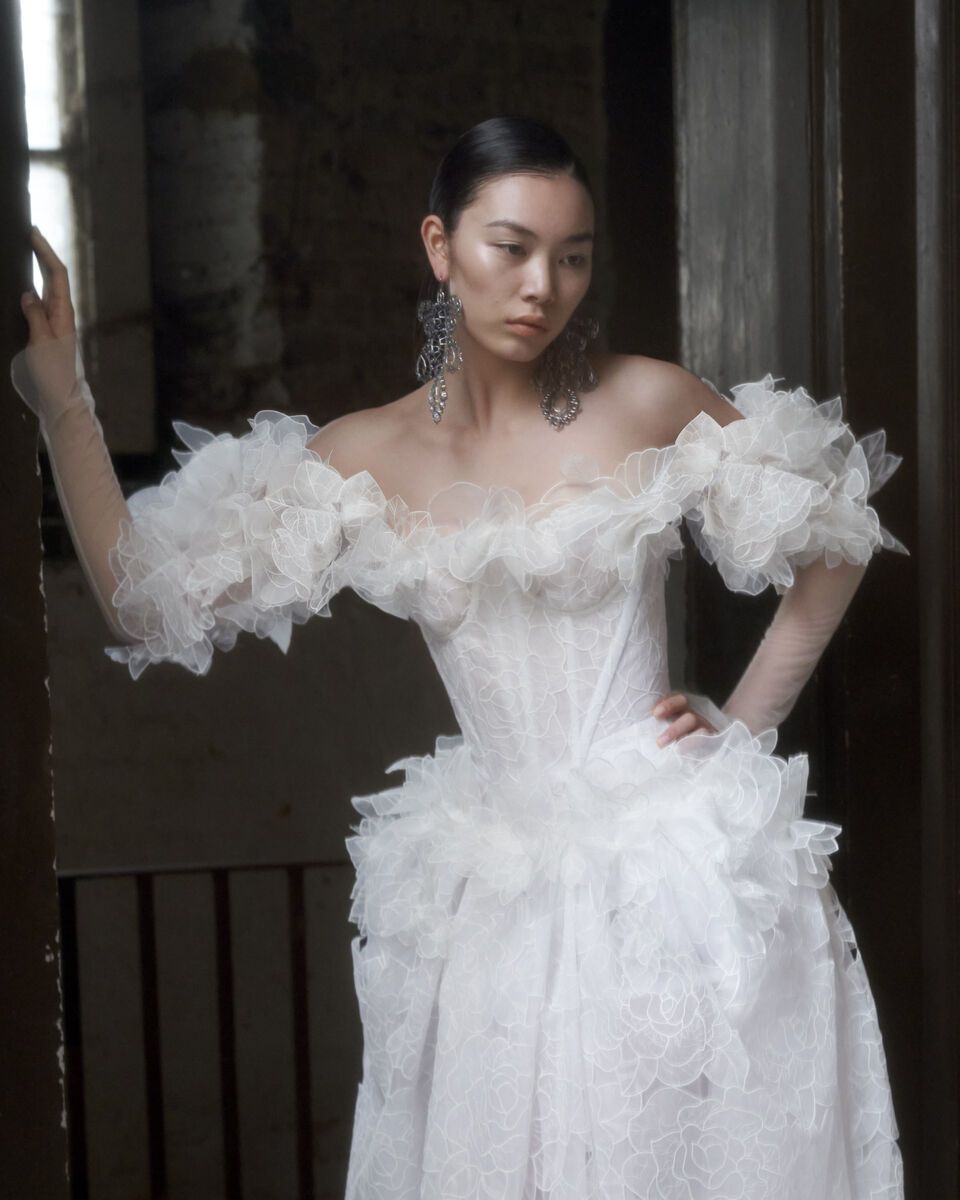
photo:Viviene Westwood
So what’s the moral of the story? Westwood didn’t just make clothes. She made us question everything—what we wear, why we wear it, and who gets to decide. Love her, hate her, call her a contradiction—but never call her boring. Because in Vivienne’s world, fashion isn’t about fitting in. It’s about standing out—loudly, intelligently, and maybe with a little smirk that says, “I told you so.”