SS26 TEMPLE: Rick Owens Baptizes the Runway in Darkness and Devotion
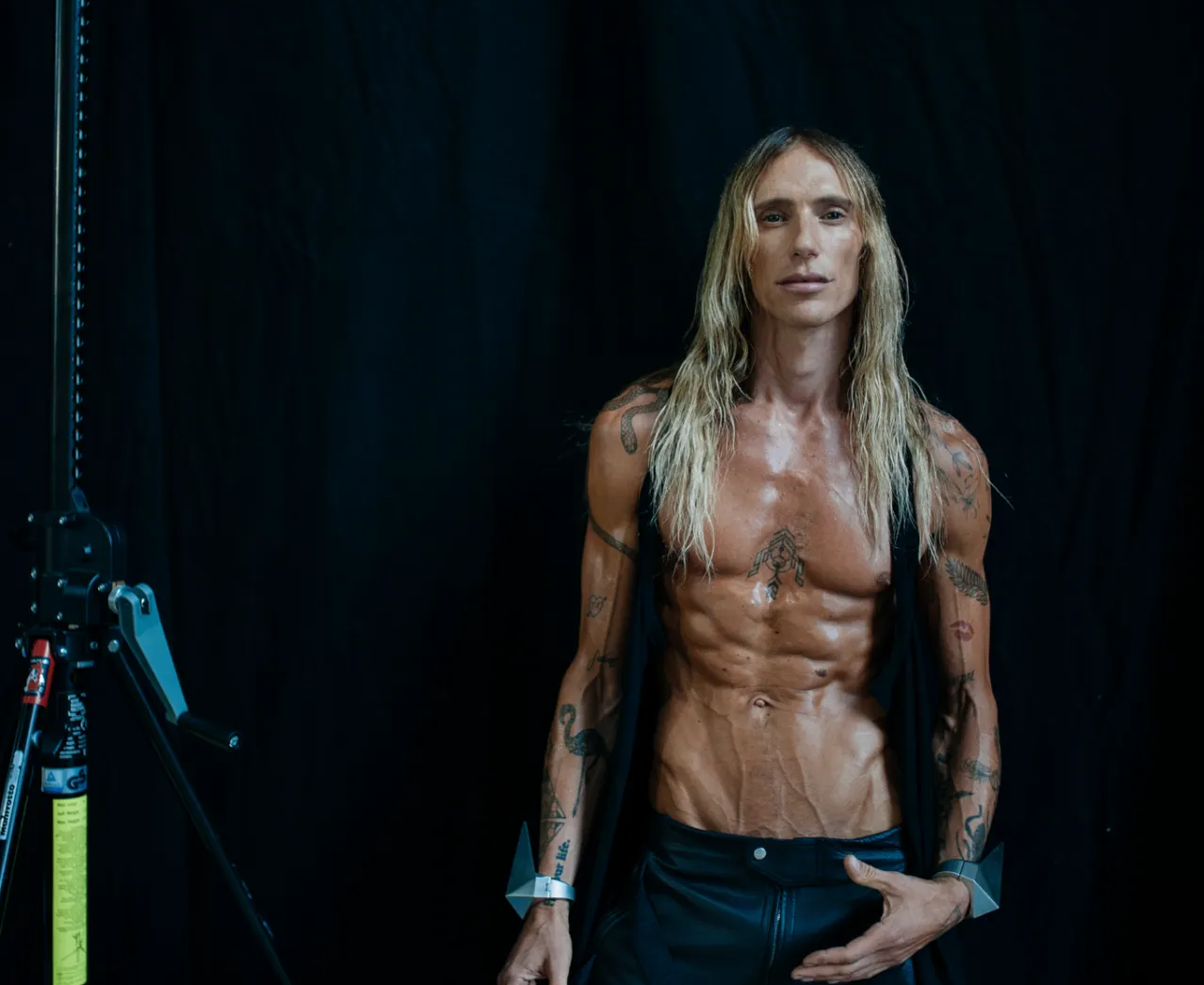
In the blazing Parisian sun, Rick Owens didn’t just host a runway show—he summoned a ceremony. Temple, the designer’s SS26 collection, unfolded on the monumental steps of the Palais de Tokyo, where ancient architecture met industrial futurism in a spectacle that was as sacred as it was confrontational. This wasn’t just fashion—it was performance, ritual, and raw emotion molded into fabric.
From the moment the first model descended the steps, bare-chested and half-wrapped in shredded black leather, it became clear: these weren’t clothes meant to hang silently on racks. These were armor-like constructions, part sculpture, part invocation. Models walked with almost mythic intensity—shoulders square, expressions severe, as if they had just emerged from some spiritual underworld, soaked in Owens’s signature blend of darkness and transcendence.
One standout look—perhaps the most sculpturally aggressive—featured exaggerated leather trousers, wrinkled and zipped along the shins, melting into sharp, hoof-like platform boots. A cropped, undone vest barely hung on the model’s frame, exposing the torso completely. The asymmetry, the leather’s weight, the tension between exposure and constraint—this was not wearable fashion, and it wasn’t trying to be. It was an artifact. And the model didn’t just wear it; he embodied it, his confident stride turning the outfit into something elemental, something ceremonial.
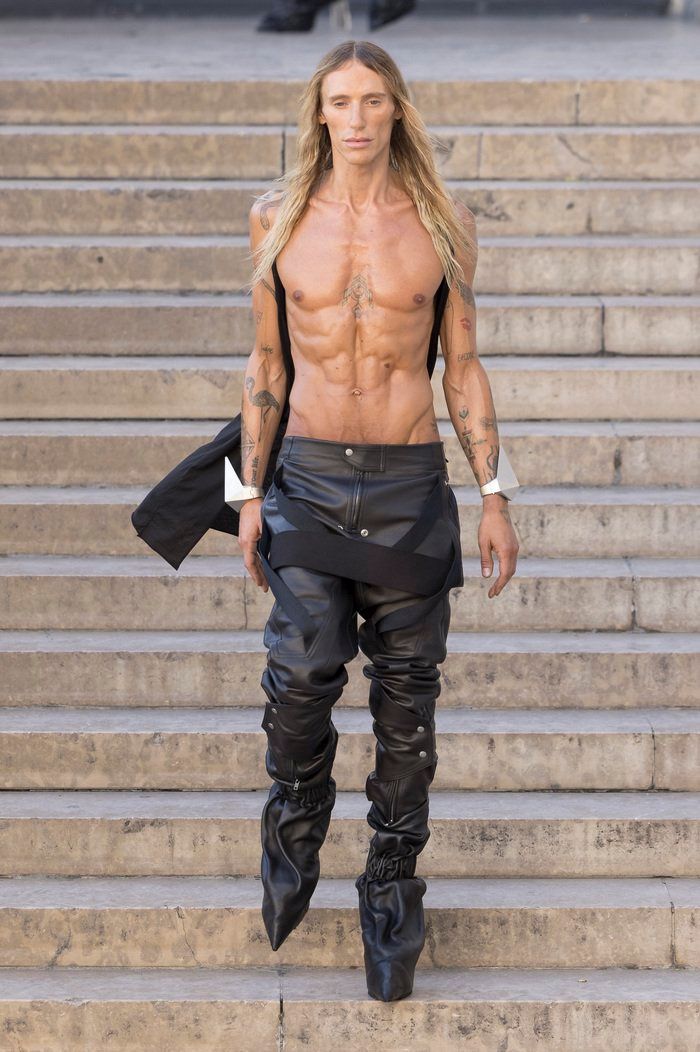
Photo:RICK OWENS
Then came a contrast in texture and tone—a distressed silver-embellished cropped jacket with raw, blistered surface detail, layered over a long, sheer white tank. Paired with oversized suede trousers, the look felt almost monastic in silhouette but wild in execution. The beading caught the light like fragments of shattered armor. It was elegance through corrosion. Softness stretched over structure, vulnerability underlined with defiance.
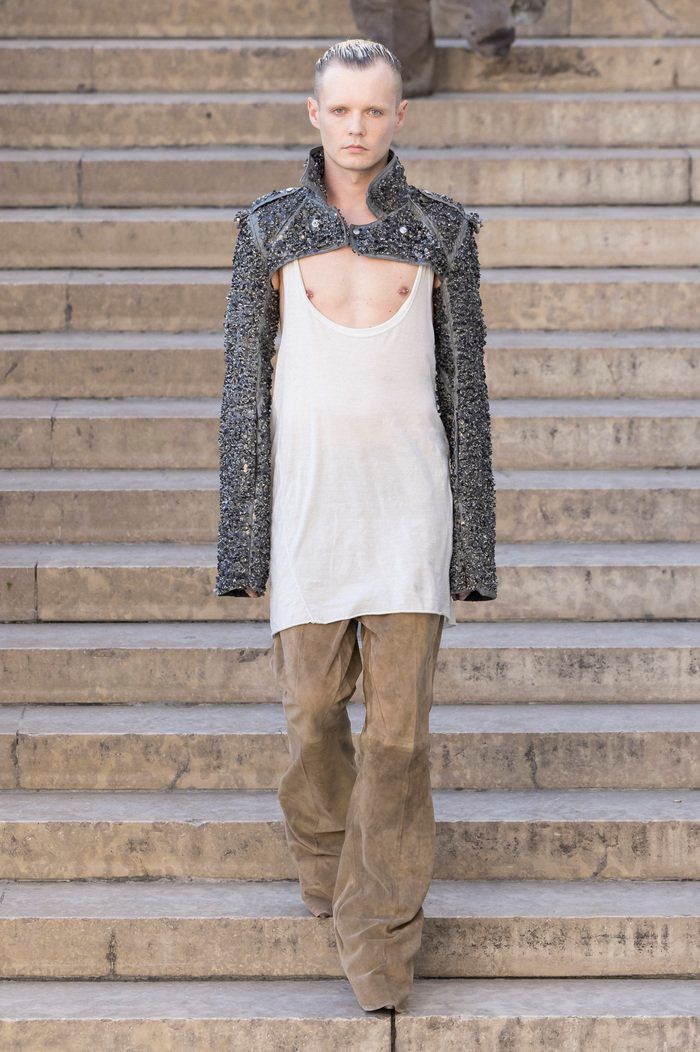
Photo:RICK OWENS
Another showstopper marched in metallic encrusted pants and an industrial chest harness—more object than garment. With skin exposed and hardware resting firmly against bone, it was a perfect illustration of Owens’s world: beauty is not about perfection, but power through distortion. The glittering brutality of the pants—heavily textured and aggressive—stood in contrast to the model’s bare chest and calm, near-detached demeanor. The tension was undeniable, and so was the control.
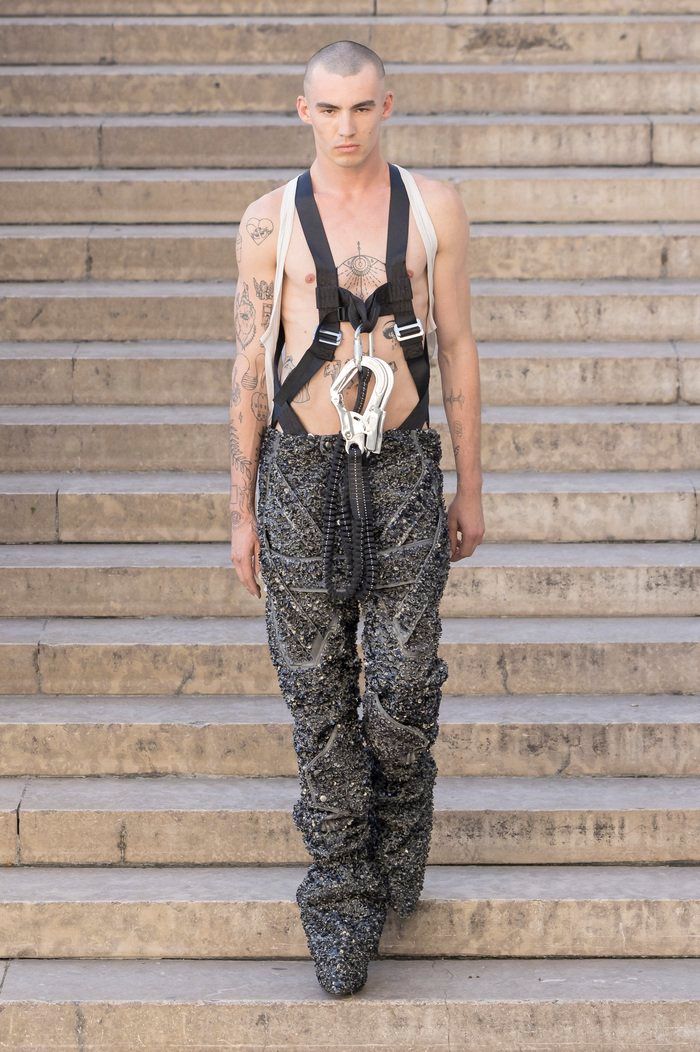
Photo:RICK OWENS
Backstage, the energy was quiet but intense. Assistants moved with reverence, models with solemnity. No frantic fittings, no fluff—just the discipline of ritual. There were murmurs about the new construction techniques used for the encrusted pants, rumored to involve hand-sewn elements and industrial bonding. The styling was minimal: slicked hair, clean faces, no embellishment beyond the clothing itself. Even behind the scenes, Rick Owens’s world was sharply curated, tightly conceptualized.
The collection as a whole pushed against comfort, against convention. Materials were scorched, distressed, soaked—yet every thread was intentional. Owens challenged ideas of wearability, asking: what if clothing didn’t flatter, but defied? What if it didn’t protect, but exposed? Temple wasn’t a place of sanctuary—it was a proving ground.
In an era where fashion is often softened for mass appeal, Rick Owens offered something unflinching. His SS26 collection was heavy, ceremonial, and unapologetically difficult. But that’s what made it unforgettable. Temple didn’t just show garments—it asked questions, demanded attention, and left you haunted.
And in the end, that’s not fashion. That’s mythology.
The FW article: